In today’s commercial and architectural projects, lighting performance is no longer defined solely by brightness or fixture design. A well-planned dimming system plays a critical role in shaping atmosphere, improving energy efficiency, extending fixture lifespan, and simplifying long-term maintenance.
From luxury hotels and resorts to office buildings, shopping malls, and hospitals, lighting control systems are now a core part of the electrical design phase. However, many project owners and contractors still struggle to select the most suitable dimming solution among commonly specified options such as Triac, 0-10V, and DALI.
At Lacelesty Lighting, we support international lighting engineering projects with luminaires compatible with multiple dimming systems. This guide explains how different dimming technologies work, where they perform best, and how to choose the right solution for your project.
What Is a Dimming System?
A dimming system is a lighting control method that adjusts light output levels instead of relying on simple on/off switching. Modern dimming systems allow users to:
-
Create different lighting scenes
-
Reduce energy consumption
-
Improve visual comfort
-
Extend LED driver and chip lifespan
-
Integrate lighting into smart building management systems
For commercial projects, selecting the correct dimming system is as important as choosing the right luminaire.
Triac Dimming System (Phase-Cut Dimming)
Overview
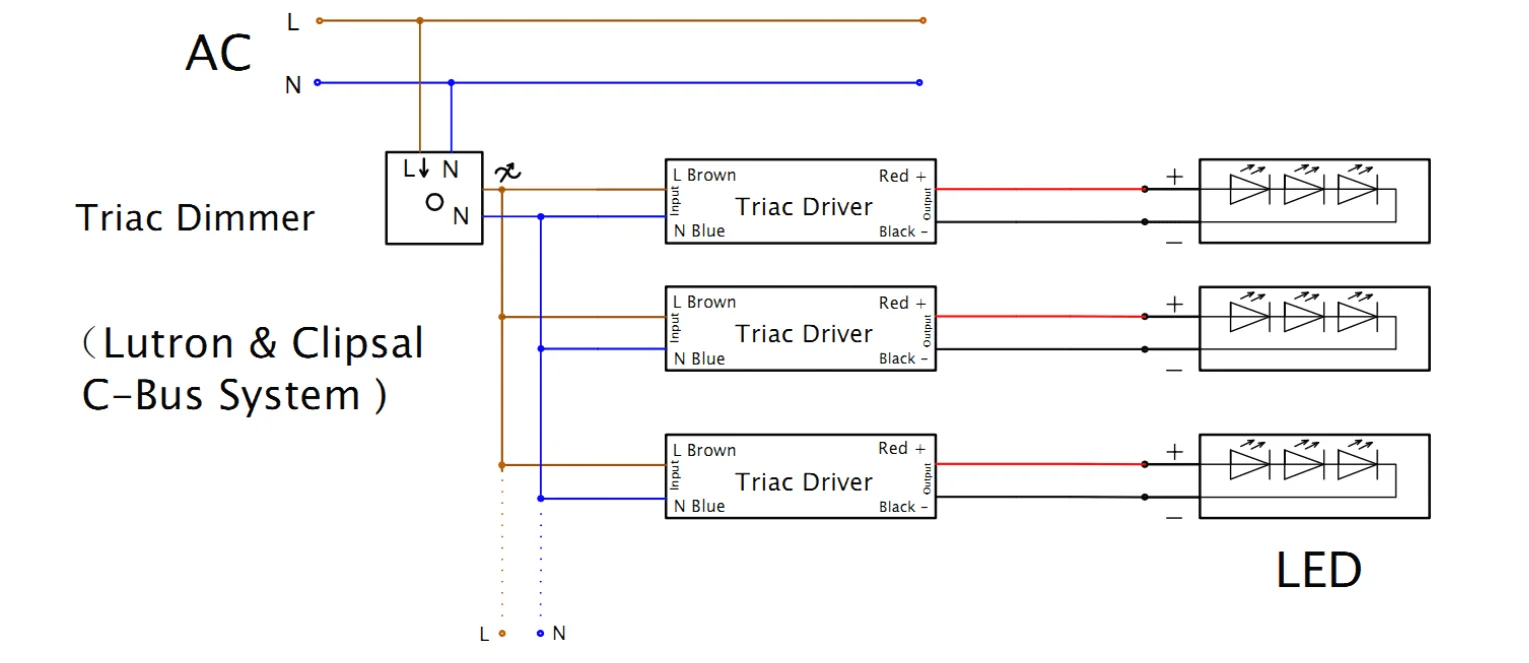
Triac dimming, also known as phase-cut dimming, is one of the earliest dimming technologies. It regulates light output by cutting portions of the AC voltage waveform before it reaches the LED driver.
Advantages
-
Low Cost: The most economical dimming system
-
Simple Wiring: Uses existing live and neutral wires only
-
Retrofit-Friendly: Ideal for renovation projects without additional control cabling
Limitations
-
Limited Dimming Range: Often unable to dim below 10–15%
-
Compatibility Issues: Flicker or noise may occur if drivers are not precisely matched
-
Not Scalable: Unsuitable for large commercial lighting networks
Typical Applications
-
Hotel guest room bedside lights
-
Small restaurants or cafés
-
Residential-style lighting areas in mixed-use buildings
0-10V Dimming System (Analog Control)

Overview
The 0-10V dimming system uses a low-voltage control signal to regulate brightness. A 10V signal delivers full brightness, while 0V dims the light to minimum or off.
Advantages
-
Stable and Reliable: A widely accepted commercial lighting standard
-
Smooth Dimming: Typically supports dimming down to 1–5%
-
Cost-Effective: Balanced price-performance ratio
Limitations
-
Additional Wiring Required: Two extra control wires increase installation labor
-
Group-Based Control: Fixtures on the same circuit dim together
-
No Feedback Function: Cannot report driver or luminaire status
Typical Applications
-
Office buildings
-
Retail stores
-
Warehouses and parking facilities
-
Commercial corridors and open-plan spaces
DALI Dimming System (Digital Addressable Lighting Interface)
Overview
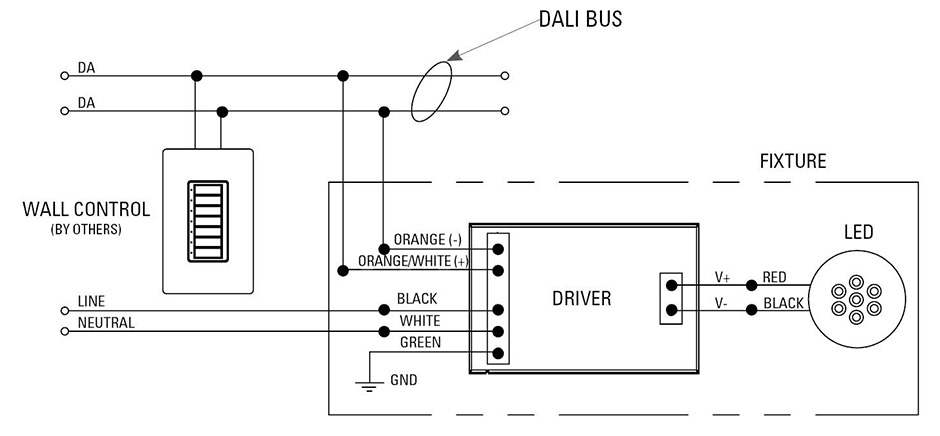
DALI is a digital lighting control protocol that allows two-way communication between fixtures and the control system. Each luminaire has an individual address, enabling advanced lighting control.
Advantages
-
Individual Fixture Control: Each light can be controlled independently
-
Scene Programming: Multiple lighting scenes without rewiring
-
System Feedback: Reports failures, overheating, or maintenance alerts
-
Smart Building Integration: Compatible with BMS, KNX, and IoT systems
Limitations
-
Higher Initial Cost: Drivers and control components are more expensive
-
Commissioning Required: Needs professional system setup and programming
Typical Applications
-
Luxury hotels and resorts
-
Ballrooms, lobbies, and conference centers
-
Airports and high-end commercial complexes
-
Smart buildings and sustainable developments
Comparison of Common Dimming Systems
| Feature | Triac | 0-10V | DALI |
|---|---|---|---|
| Control Type | Analog | Analog | Digital |
| Wiring | 2-wire (AC only) | 4-wire | 4-wire |
| Dimming Precision | Low–Medium | High | Very High |
| Individual Control | No | No | Yes |
| System Feedback | No | No | Yes |
| Typical Cost Level | Low | Medium | High |
How to Choose the Right Dimming System
When selecting a dimming system, consider the following factors:
-
Project Scale – Larger projects benefit from digital control
-
Lighting Scene Complexity – Multiple scenes require DALI
-
Budget Constraints – Balance upfront cost with long-term efficiency
-
Maintenance Strategy – Smart feedback reduces operational costs
-
Future Expansion – Digital systems allow easier upgrades
Lacelesty’s Professional Recommendation
-
Choose DALI for premium hotels, smart buildings, and projects requiring advanced lighting control
-
Choose 0-10V for offices, malls, and standard commercial facilities
-
Choose Triac for renovation projects or simple lighting zones
Lacelesty Lighting: Project-Based Dimming System Solutions
As a Chinese lighting brand and manufacturer specializing in overseas engineering projects, Lacelesty Lighting provides:
-
DALI, 0-10V, and Triac compatible luminaires
-
Driver options from Tridonic, Philips, Osram, Lifud, and equivalent brands
-
Flicker-free performance for hospitality and commercial applications
-
Technical support from design to commissioning
If you have any questions about choosing the right dimming system for your project, please contact Lacelesty Lighting. Our engineering team is ready to support your next lighting solution.