Industrial lighting is no longer just about brightness. Today’s factories, infrastructure facilities, and utility environments require lighting systems that support operational efficiency, safety management, and long-term cost control. In this context, the industrial strip light has become a practical and scalable lighting solution across a wide range of industrial applications.
Rather than focusing on a single use case such as tunnels, industrial strip lights are increasingly used as a standardized lighting system across production areas, technical corridors, and large industrial zones. This article explores industrial strip lights from a system-level perspective, including design logic, application value, and selection guidance.
Understanding Industrial Strip Light as a Lighting System

An industrial strip light is a linear LED luminaire designed for continuous operation in demanding environments. Its purpose is not decorative accent lighting, but functional illumination that supports industrial workflows.
Unlike traditional industrial fixtures that rely on spaced installations, strip lights are designed to work as connected lighting lines, providing even illumination across extended areas. This approach simplifies layout planning and creates predictable lighting performance.
Key characteristics typically include:
-
Linear structure with modular connection
-
Stable lumen output over long operating hours
-
High resistance to environmental stress
-
Compatibility with industrial power systems
Why Industrial Strip Lights Fit Modern Industrial Operations
Designed for Process-Oriented Spaces
Industrial spaces are often organized around processes rather than aesthetics. Conveyor systems, assembly lines, inspection corridors, and service walkways all benefit from linear lighting that follows the flow of movement and work.
Strip lights align naturally with these layouts, making lighting design more intuitive and reducing unnecessary overlaps or dark zones.
Consistent Lighting Supports Quality Control
In manufacturing and inspection environments, inconsistent lighting can affect visual accuracy. Industrial strip lights provide uniform illumination, helping operators identify defects, read labels, and perform detailed tasks with greater precision.
Reduced Installation Complexity
Using fewer power connection points and standardized mounting methods, industrial strip lights help reduce installation time. This is especially valuable in large facilities where downtime directly impacts production schedules.
Typical Industrial Applications Beyond Tunnels
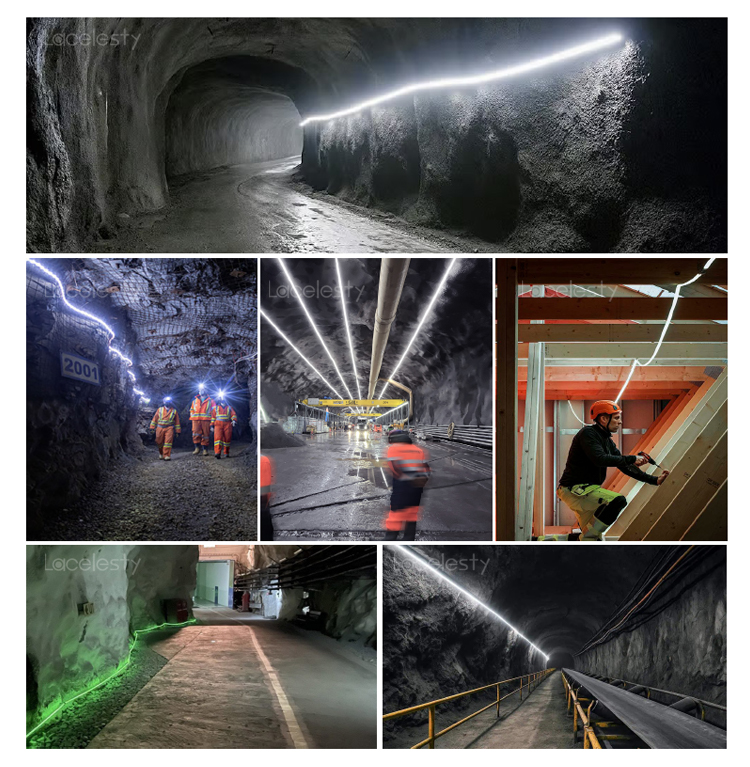
Industrial strip lights are widely used in many environments, including:
-
Production workshops and assembly halls
-
Warehouses and logistics centers
-
Equipment maintenance corridors
-
Utility and pipe galleries
-
Power plants and substations
-
Parking structures and technical rooms
Their adaptability makes them suitable for both new construction and retrofit projects.
Technical Features That Define an Industrial Strip Light
The table below highlights how industrial strip lights differ from conventional industrial lighting fixtures:
| Feature | Industrial Strip Light | Traditional Industrial Fixture |
|---|---|---|
| Light Distribution | Continuous, uniform | Discrete, point-based |
| Installation Layout | Linear, modular | Fixed spacing |
| Maintenance | Fewer units, easier access | More fixtures to service |
| Energy Efficiency | High (LED-based) | Medium to low |
| Space Utilization | Slim profile | Bulkier housing |
| Scalability | Easy to extend | Limited flexibility |
This comparison explains why many industrial projects are shifting toward strip-based lighting systems.
Key Performance Factors to Consider
When specifying industrial strip lights, decision-makers should focus on performance rather than appearance.
Environmental Protection
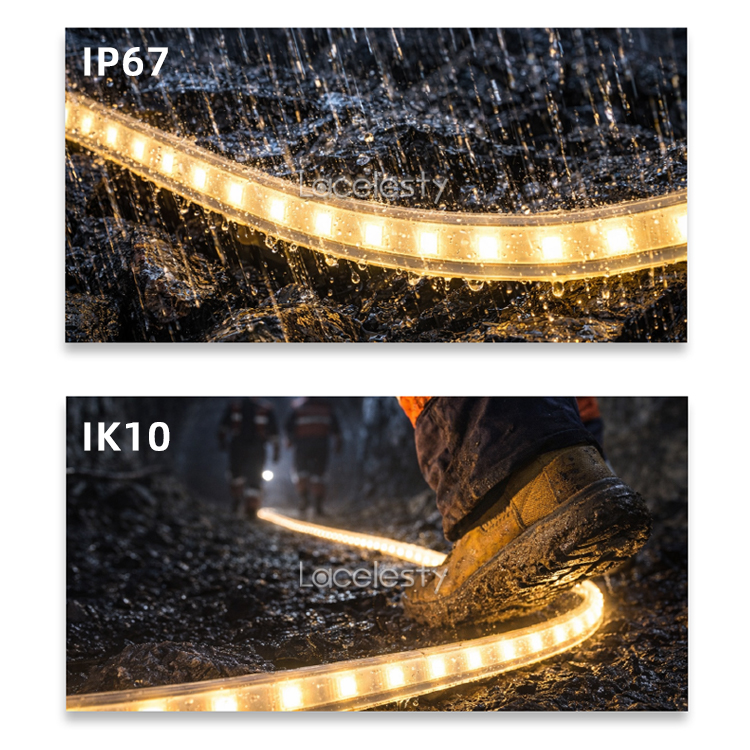
Industrial environments often involve dust, moisture, and temperature variation. Selecting appropriate ingress protection ensures stable operation over time.
Thermal Management
Effective heat dissipation is critical for long-term LED performance. High-quality industrial strip lights use optimized housing designs to maintain lumen stability.
Electrical Stability
Consistent voltage handling and reliable internal components reduce flicker, light degradation, and premature failure—important factors in 24/7 industrial operations.
Maintenance Strategy
Long-life LED systems reduce maintenance frequency, which is particularly important in high-ceiling or restricted-access areas.
Industrial Strip Lights as a Long-Term Investment
While initial product cost is always a consideration, industrial strip lights should be evaluated based on total lifecycle value. Energy savings, reduced maintenance, and improved operational efficiency often outweigh upfront expenses.
For facility owners and project developers, standardized strip lighting also simplifies future expansion or modification, making it a future-proof choice.
Work with Lacelesty Lighting for Professional Industrial Strip Light Solutions
Lacelesty Lighting is an experienced manufacturer providing architectural and industrial LED lighting solutions for global projects. With a strong focus on industrial environments and infrastructure applications, Lacelesty Lighting designs industrial strip lights that balance performance, durability, and practicality.
By working closely with contractors, engineers, and project owners, Lacelesty Lighting offers:
-
Industrial-grade strip light solutions for diverse applications
-
Consistent product quality and reliable delivery
-
Technical support from specification to installation
-
Customization options based on project requirements
If you are planning an industrial lighting upgrade or a new facility project, Lacelesty Lighting is ready to support your needs.
📩 Contact Lacelesty Lighting today to discuss your application and receive professional guidance and pricing.