Introduction
In modern industrial and commercial environments, lighting must perform reliably under challenging conditions. Spaces such as factories, warehouses, car parks, food processing plants, and tunnels often expose luminaires to moisture, dust, corrosion, and impact. That’s where Tri-Proof Lights — waterproof, dustproof, and corrosion-proof luminaires — prove indispensable.
Designed for durability and long-term performance, LED Tri-Proof Lights have become a preferred solution for professional lighting projects that demand both efficiency and resilience. This guide explores everything professionals need to know: from types and applications to technical standards, smart control integration, and future trends in sustainable lighting.
Understanding Tri-Proof Lights and Their Types
“Tri-Proof” refers to three forms of protection — waterproof, dustproof, and corrosion-resistant. Over the years, this product category has expanded into several design variations suitable for diverse applications.
| Type | Image | Key Features | Typical Applications |
|---|---|---|---|
| Traditional Linear Tri-Proof Lights | 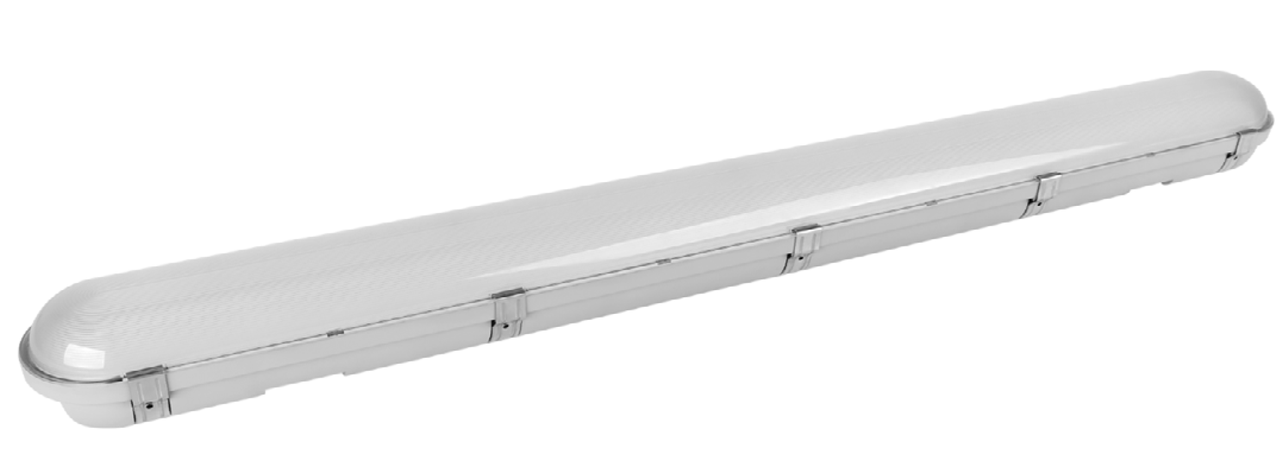 |
Made from high-impact Polycarbonate (PC) or ABS housings. Provide even linear illumination. | Warehouses, car parks, service corridors, storage rooms |
| Aluminium-Body Tri-Proof Lights | 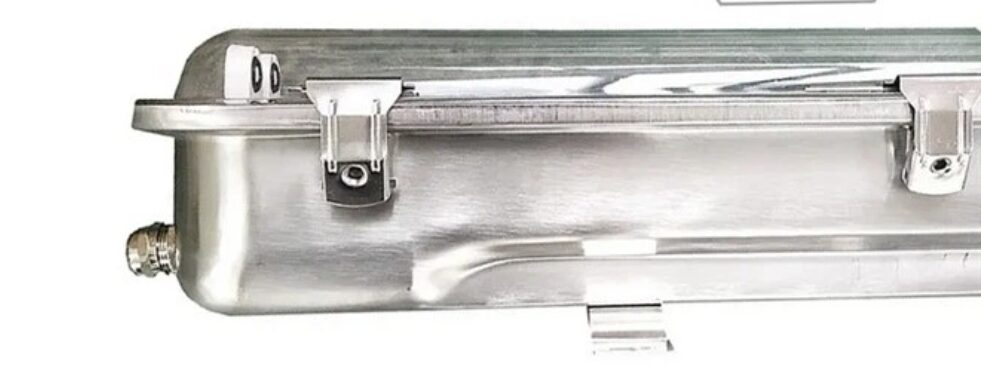 |
Offer superior heat dissipation and mechanical strength. Ideal for high-temperature or industrial environments. | Factories, production lines, mechanical workshops |
| Slim LED Tri-Proof Lights | 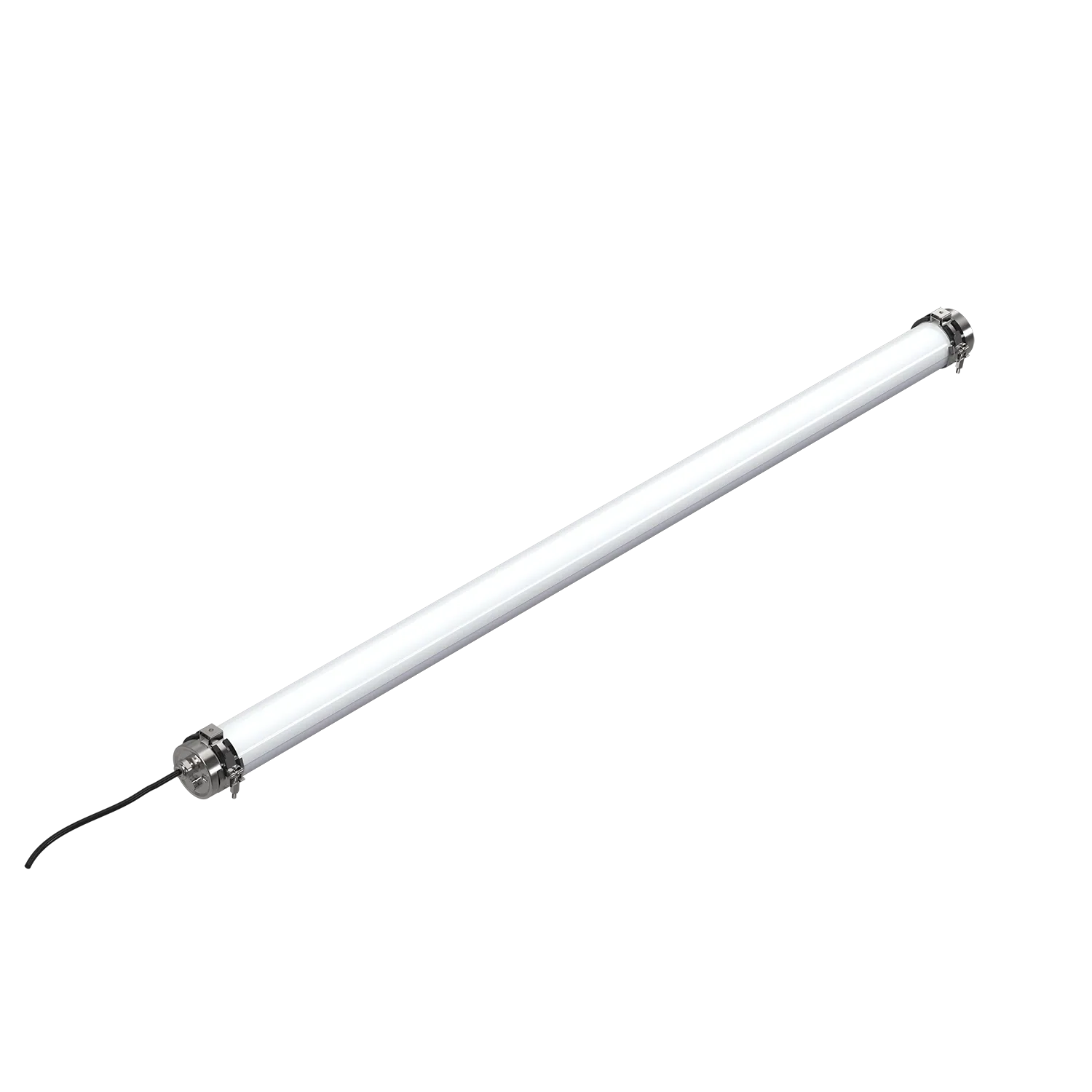 |
Compact design with high efficacy; suitable for aesthetic or space-restricted installations. | Commercial kitchens, laboratories, utility rooms |
| Smart Tri-Proof Lights | 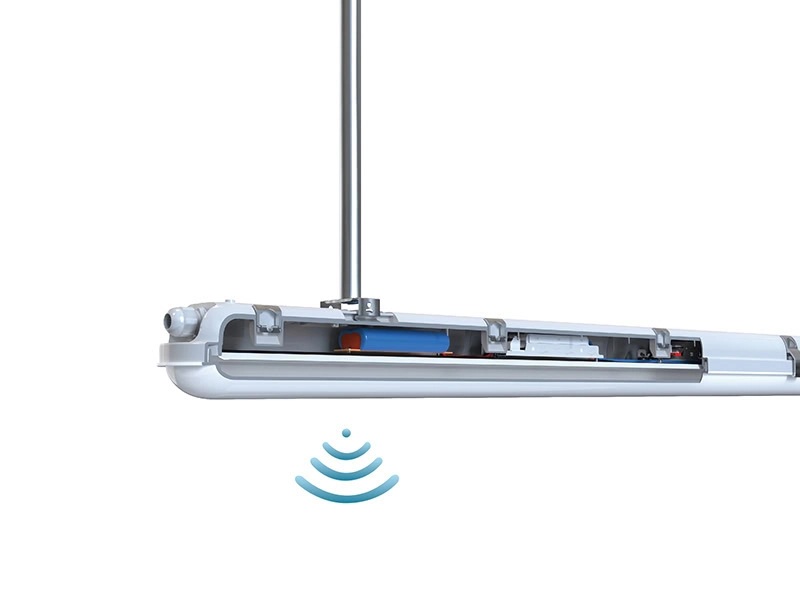 |
Integrated with motion sensors, DALI or Zigbee control systems for energy efficiency. | Logistics centers, retail stores, intelligent building systems |
Each design provides reliable illumination while minimizing maintenance and ensuring long-term cost savings.
What Makes a Project-Grade Tri-Proof Light
When sourcing for large-scale projects, not all Tri-Proof Light fixtures are created equal. The distinction between a professional-grade luminaire and a cheap consumer model lies in the quality of materials, internal components, and certification standards.
1. Materials and Construction
-
Housing: Premium project models use UV-stabilized Polycarbonate or Aluminium, preventing discoloration and deformation.
-
Clips and Hardware: Stainless steel (304 or 316) components resist corrosion, especially in humid or chemical environments.
-
Sealing: High-grade silicone gaskets and pressure-equalizing valves maintain IP integrity over years of operation.
2. LED Components and Drivers
-
LED Chips: Reputable brands such as OSRAM, Lumileds, or Philips ensure high luminous efficacy (≥130 lm/W) and accurate color rendering (CRI >80).
-
Drivers: Trusted options like Tridonic, BOKE, or SOSEN provide stable performance, flicker-free operation, and long lifespan (L80B10 @ 60,000 hours).
3. Certification and Compliance
Professional Tri-Proof Lights typically carry certifications such as ENEC, CE, and RoHS, proving third-party verification of safety and performance. Such markings indicate reliability for international engineering projects — a guarantee missing from many retail-grade models.
Understanding IP and IK Ratings: The Core of Protection
Tri-Proof Lights earn their reputation from their high IP (Ingress Protection) and IK (Impact Protection) ratings.
| Standard | Description | Recommended Level |
|---|---|---|
| IP65 | Dust-tight and resistant to low-pressure water jets | General indoor/outdoor use |
| IP66 / IP67 | Withstands strong water jets or immersion | Food processing, car wash, exterior façades |
| IK08 | Withstands 5 joules of impact | Industrial areas and public facilities |
| IK10 | Withstands 20 joules of impact | High-vandalism zones like tunnels and stations |
These ratings ensure that LED Tri-Proof Fixtures remain operational in tough environments where water, dust, or mechanical damage could otherwise compromise performance.
Smart and Sustainable Lighting: The Future of Tri-Proof Solutions
As global industries move toward energy-efficient and smart lighting, Tri-Proof Lights are evolving to meet new expectations.
Intelligent Control Integration
Modern Smart Tri-Proof Lights now feature:
-
DALI or 0-10V dimming
-
Microwave motion sensors
-
Daylight harvesting systems
-
Zigbee / Bluetooth mesh connectivity
Example:
In a logistics warehouse, lights operate at 10% standby brightness. When a forklift enters an aisle, motion sensors trigger full brightness. After a few minutes of inactivity, the luminaires dim back automatically. This reduces energy consumption by up to 60% while maintaining safety and visibility.
Sustainability and Energy Efficiency
Sustainability is central to next-generation designs:
-
High efficacy up to 160 lm/W reduces electricity costs.
-
Recyclable materials promote circular manufacturing.
-
Modular construction enables easy maintenance and end-of-life recycling.
These features make Energy-Efficient Tri-Proof Lights a key component of modern green building initiatives.
Common Installation and Project Challenges
Even the best luminaire can fail if installation practices are not followed correctly. Professionals often face these challenges:
-
Compromised Sealing: Loose cable glands or improperly closed covers can reduce IP rating and allow moisture ingress.
-
Incorrect Control Wiring: With DALI or motion-sensor systems, reversing polarity or incorrect daisy-chaining may lead to communication errors.
-
Overheating: Poor ventilation in high-temperature areas without aluminium-body fixtures can shorten driver life.
Choosing experienced installers and verified industrial lighting suppliers prevents these costly mistakes.
Conclusion
Specifying Tri-Proof Lights for commercial or industrial projects is more than a matter of watts and lumens. It involves understanding materials, components, certifications, environmental protection standards, and smart control compatibility.
While low-cost alternatives may seem tempting, only project-grade Tri-Proof Luminaires guarantee long-term reliability, lower maintenance, and superior energy performance — ensuring your project’s success from design to operation.
Lacelesty Lighting specializes in professional LED lighting solutions for engineering and architectural projects worldwide.
If you have any questions or need expert advice on Tri-Proof Lights, please contact Lacelesty — our team will gladly help you find the perfect lighting solution.